A Photo Essay from the Farmers Market
Introduction — Finding Story in Ordinary Motion
On a peaceful Sunday morning, the farmers market becomes a stage of small, revealing gestures. As Ron Reason reminds us, visual storytelling works best when images, design, and narrative are woven intentionally when photographs don’t merely document but communicate. These still frames, captured from a fixed vantage point across the street, show the rhythm of a neighborhood in motion.
This essay follows the principles of narrative sequencing that Mario García describes as the “fusion” of writing, editing, and design letting images lead the story while the text deepens its texture (García, Digital Storytelling). Through these quiet pedestrian moments, we see a living portrait of community life and its decisive instants.
The Running Girl — The Decisive Moment in Pastel Light
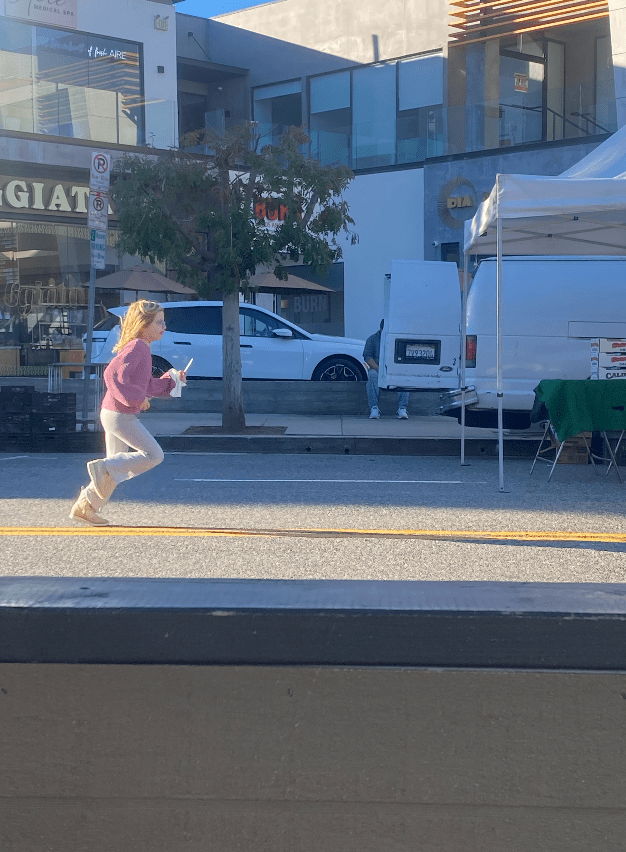
In the first image, a young girl bursts into the frame mid-stride, clutching a cup and spoon. Her movement slices diagonally across the quiet street, her shadow trailing behind her.
This is the kind of instinctive capture Henri Cartier-Bresson called the decisive moment the exact fraction of a second when form and meaning align. The stillness of the street behind her amplifies the kinetic tension. Here, spontaneity becomes the story: childhood energy against a backdrop of adult errands and calm morning sun.
Annie Schugart notes that multimedia journalism succeeds when it allows audiences to “experience” a place, not just observe it. This image pulls the viewer directly into the market’s atmosphere.
The Father in Motion — Everyday Caregiving as Narrative

A man pushes a stroller with one hand while holding a small child in the other arm. The gesture is tender, balancing responsibility and movement.
The NPR Visual Journalism guide explains that good visual storytelling often emerges from moments of care scenes that reveal how people relate to one another in public spaces. The composition echoes that principle, placing caregiving at the center of communal life.
There is no spectacle here, only the understated choreography of a parent navigating a weekend morning.
The Flower Carrier — Color as Character
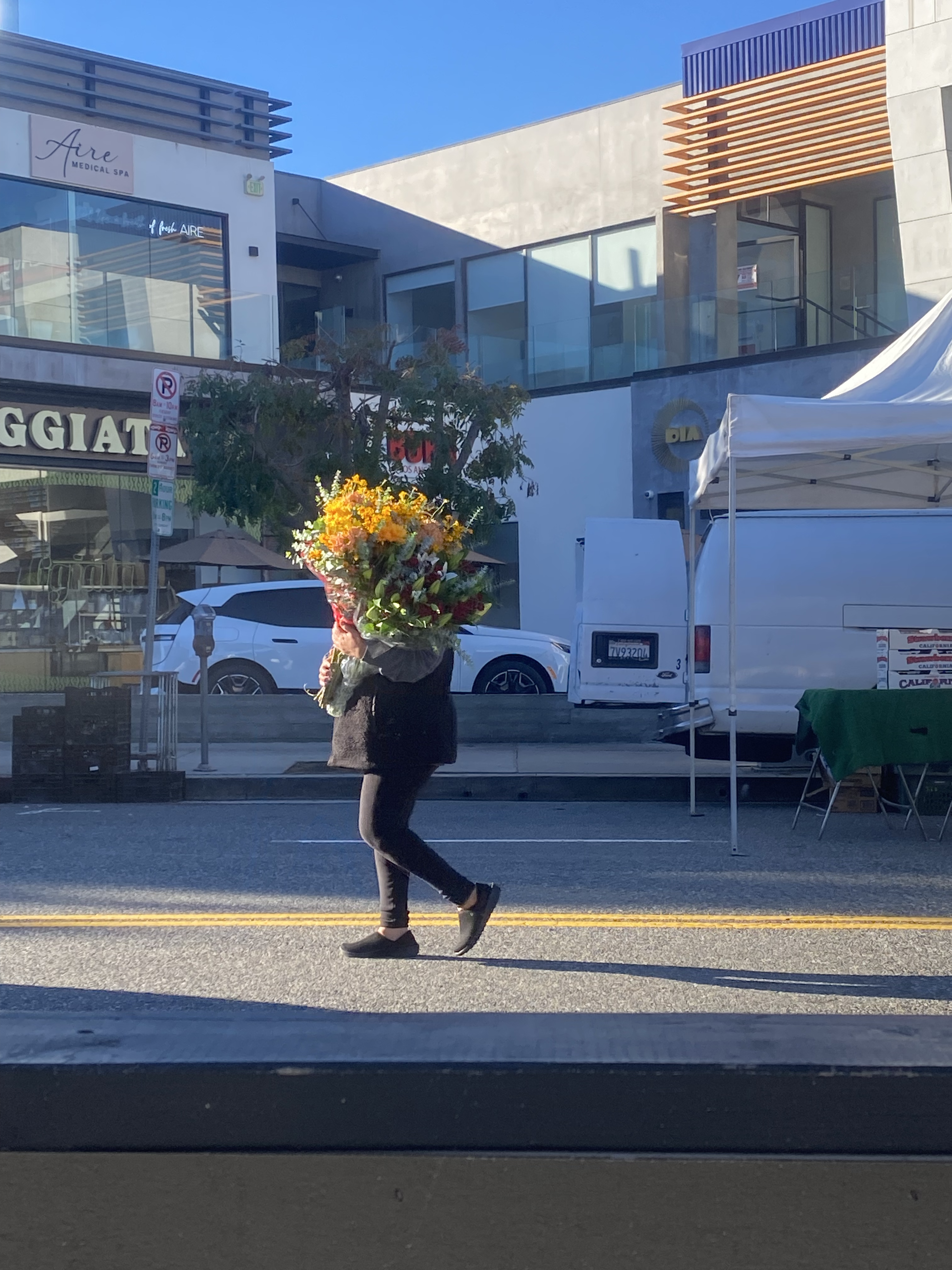
A person crosses the frame wrapped in a large bouquet of bright yellow blossoms that obscure their face. The flowers become the main subject a burst of color that transforms an ordinary walk into a moment of visual poetry.
Following Photo Narratives methodology, this image acts as a “beat,” a transition between human-centered action shots. The bouquet becomes a symbol of the market’s abundance, but also an anchor of warmth in the cool morning shadows.
The image works like a minimalist story: one figure, one object, one gesture.
The Dropped Bag — A Pause in the Flow
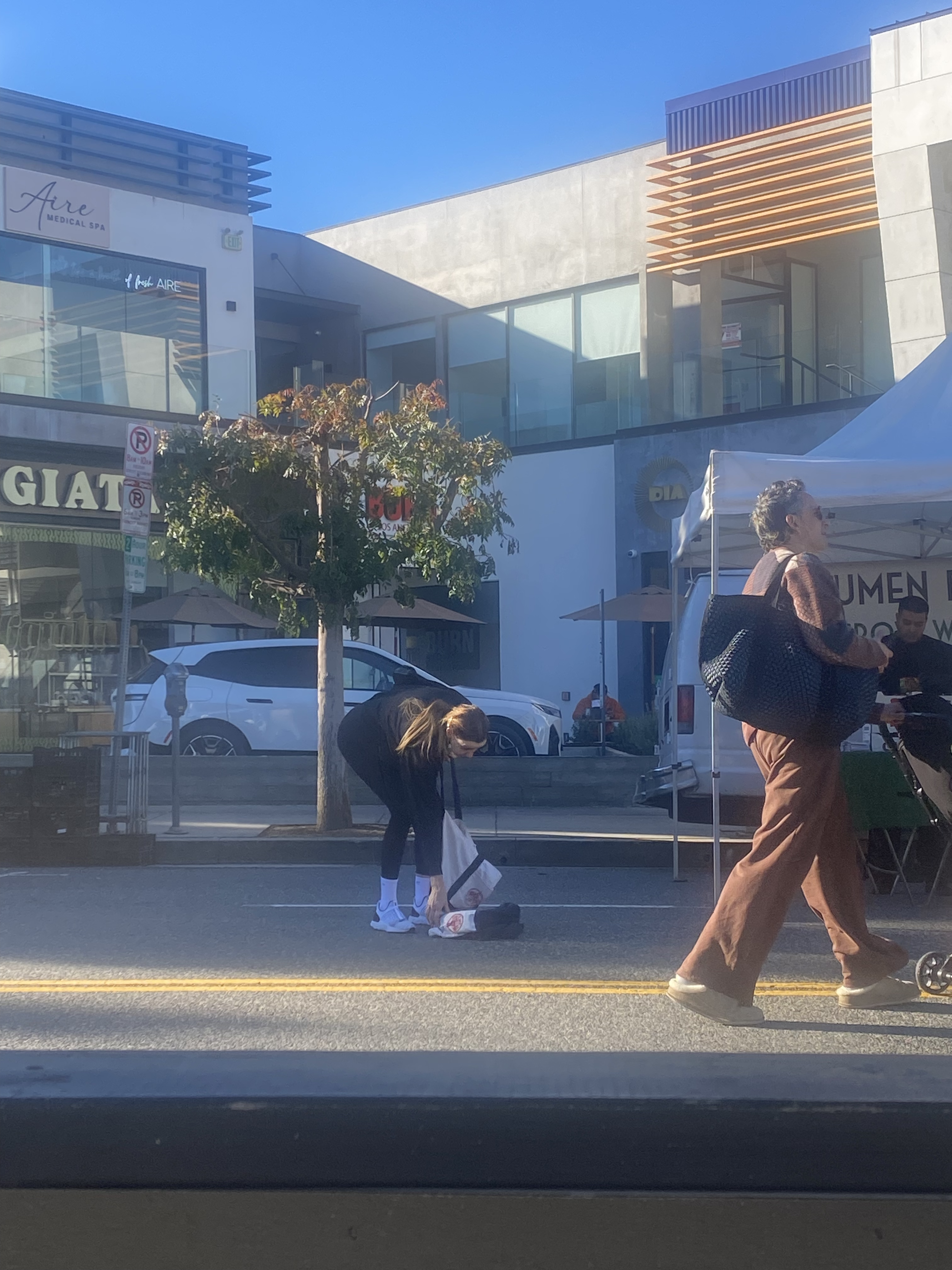
A person bends down to gather scattered items from a fallen tote bag an interruption within the otherwise steady stream of people.
According to Reading the Pictures, great photojournalism often reveals emotional micro-events tiny disruptions that expose vulnerability or human imperfection. Here, the bending figure becomes a counterpoint to the upright rhythm of other subjects. The surrounding walkers barely notice, but the camera does.
This moment of stillness becomes a narrative hinge, slowing the sequence and drawing attention to everyday fragility.
The Curious Child — Direct Gaze as a Story Device
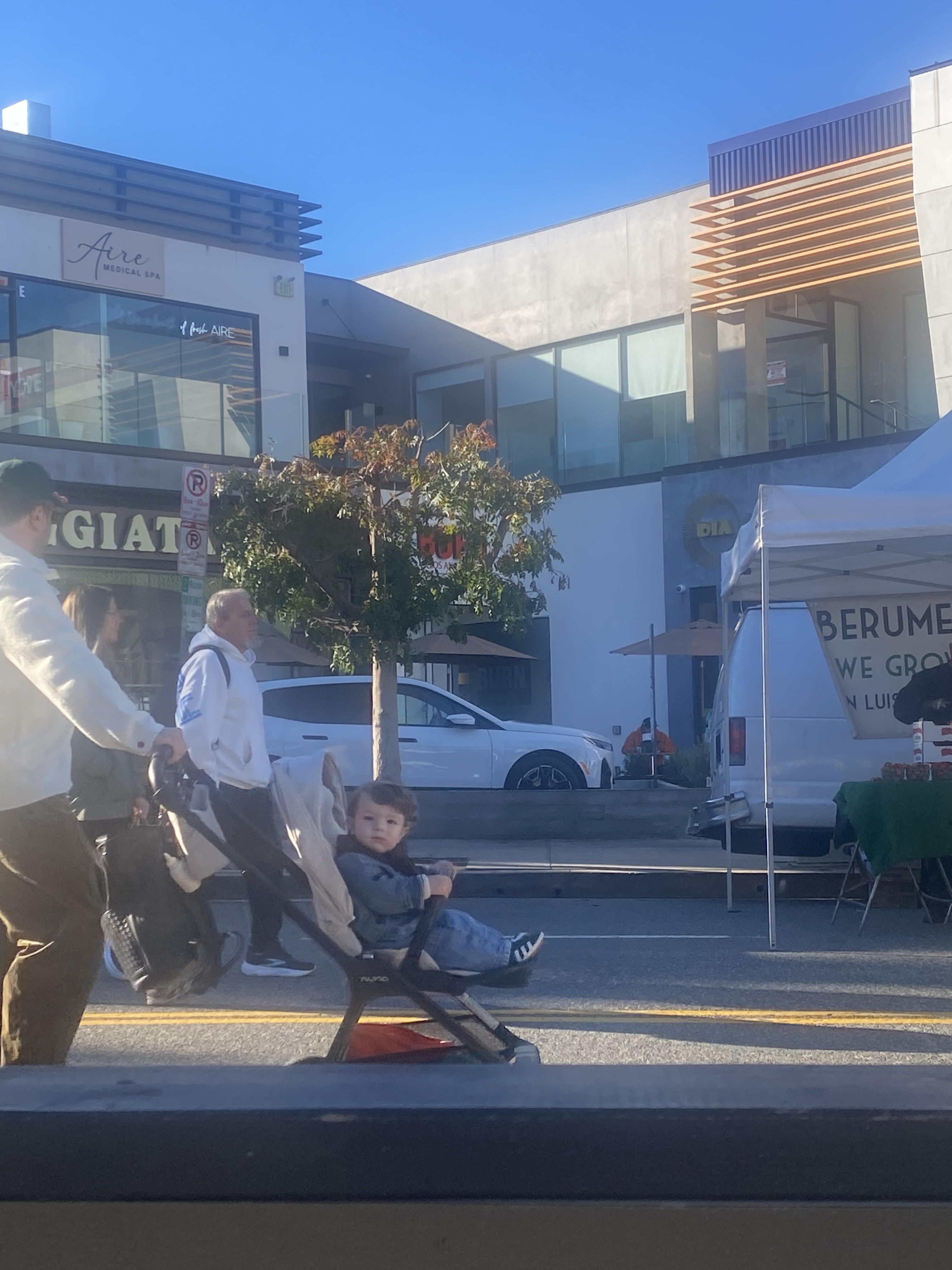
A small child sits in a stroller, paused in mid-roll, looking directly toward the camera with a quiet, almost questioning expression.
Direct gaze is one of visual journalism’s most compelling devices it breaks the observer/observed barrier. The New York Times Lens blog often features images where subjects unexpectedly meet the camera, transforming street scenes into intimate exchanges.
Here, the child becomes the emotional anchor of the frame, grounding the sequence with an unfiltered moment of connection.
The Couple in Step — Shared Rhythm in Public Space
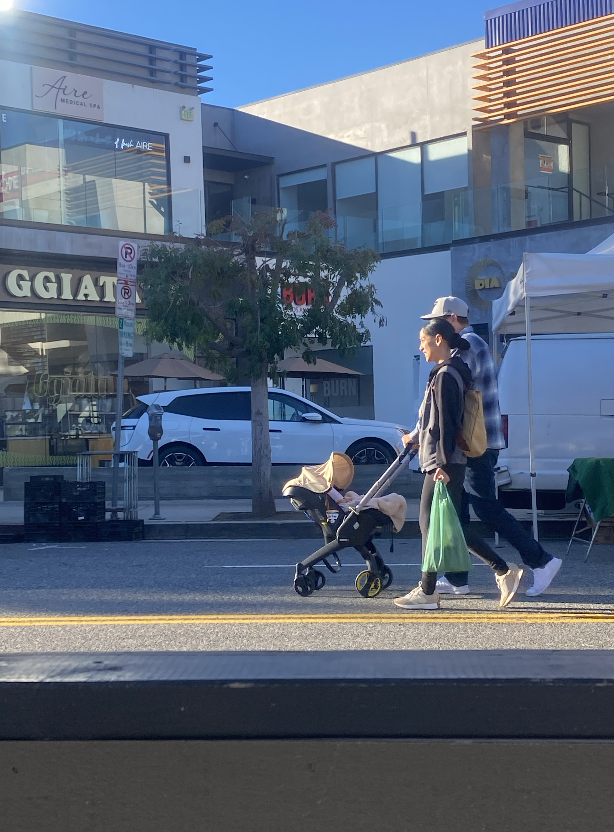
In this frame, the quiet choreography of everyday caregiving becomes a shared gesture rather than an individual one. The two adults move almost in sync, their steps aligned as they guide a stroller down the sunlit street. Nothing monumental happens here and that is precisely where its narrative power resides. The couple’s coordinated pace suggests a partnership built on routine, cooperation, and the soft negotiations of daily life.
The scene reflects NPR’s Visual Journalism principle that powerful images often reveal the subtle ways people care for one another in public spaces (“Visual Journalism”). Their togetherness becomes the focal point: shared movement, shared responsibility, shared presence. In a sequence filled with individual gestures running, bending, shielding, pausing this photograph introduces a moment of collective motion, reinforcing the essay’s guiding theme of community as a living, breathing choreography.
The Woman in Blue — Purposeful Motion
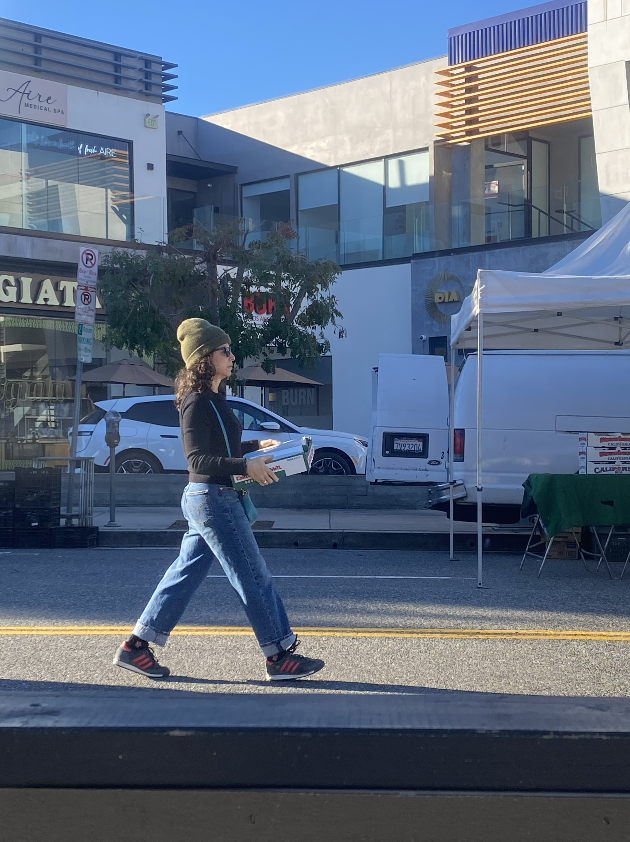
A woman strides confidently across the frame carrying packaged groceries. Her posture is upright, her expression focused.
Her movement restores the forward momentum of the photo sequence after the reflective stillness of the previous images. As DuckRabbit often demonstrates, street photography gains meaning through juxtaposition each subject interacts with the others through sequencing, not contact.
She becomes the narrative “reset,” bringing the viewer back into the flow of errands and routine.
The Shopper with the Rolling Cart — The Slow Exit from the Scene

The final image shows a person pulling a rolling cart, one hand raised to shield their eyes from the sun. This gesture of shielding half-protective, half-practical marks a natural endpoint.
This frameworks like a closing shot in multimedia journalism: a figure leaving the scene, moving out of the narrative space. Annie Schugart argues that good interactive storytelling knows when to end when to let the viewer step away with a lingering emotion.
This last subject feels like the quiet fade-out: the market continues, but the story folds itself politely away.
Conclusion — A Communal Choreography in Eight Frames
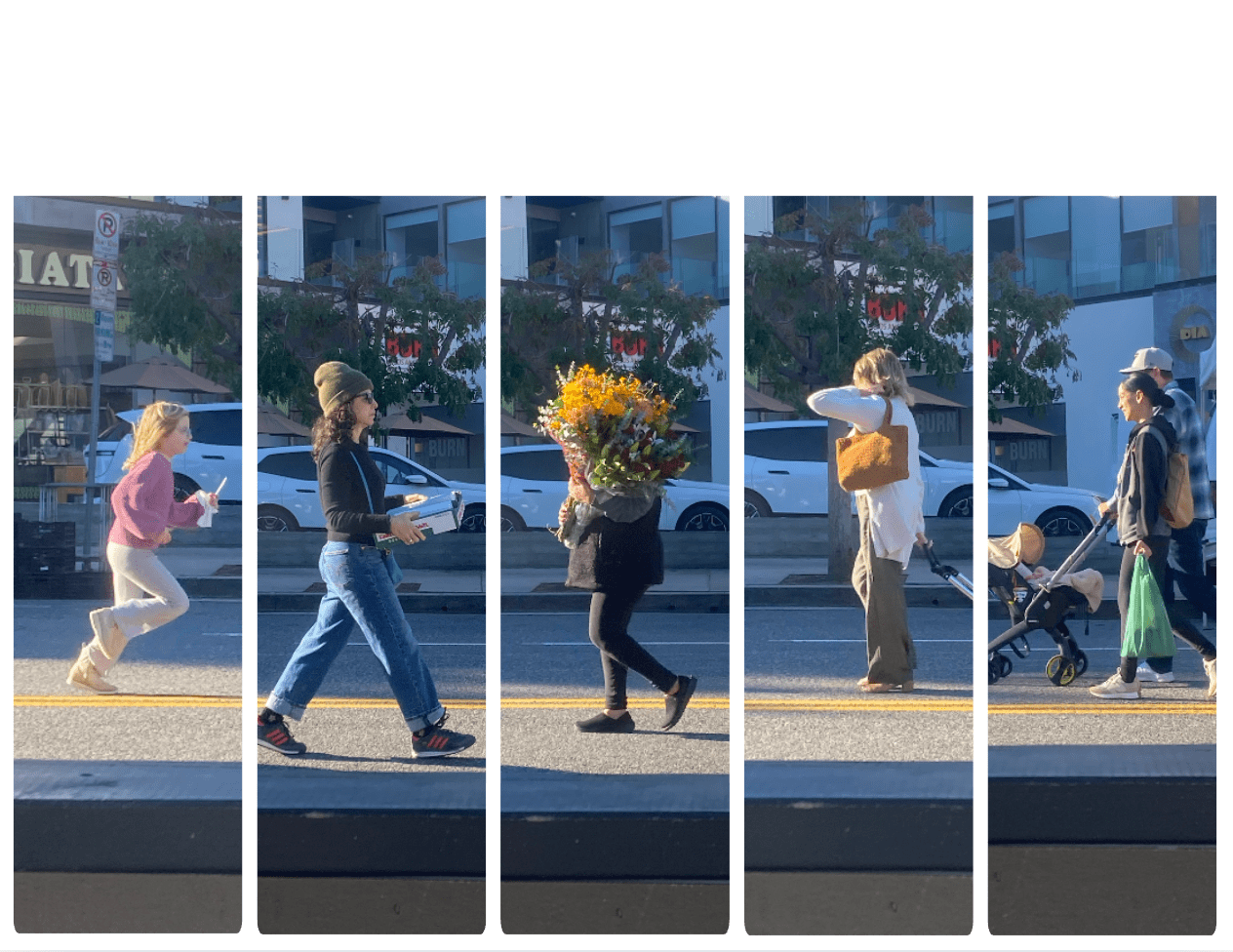
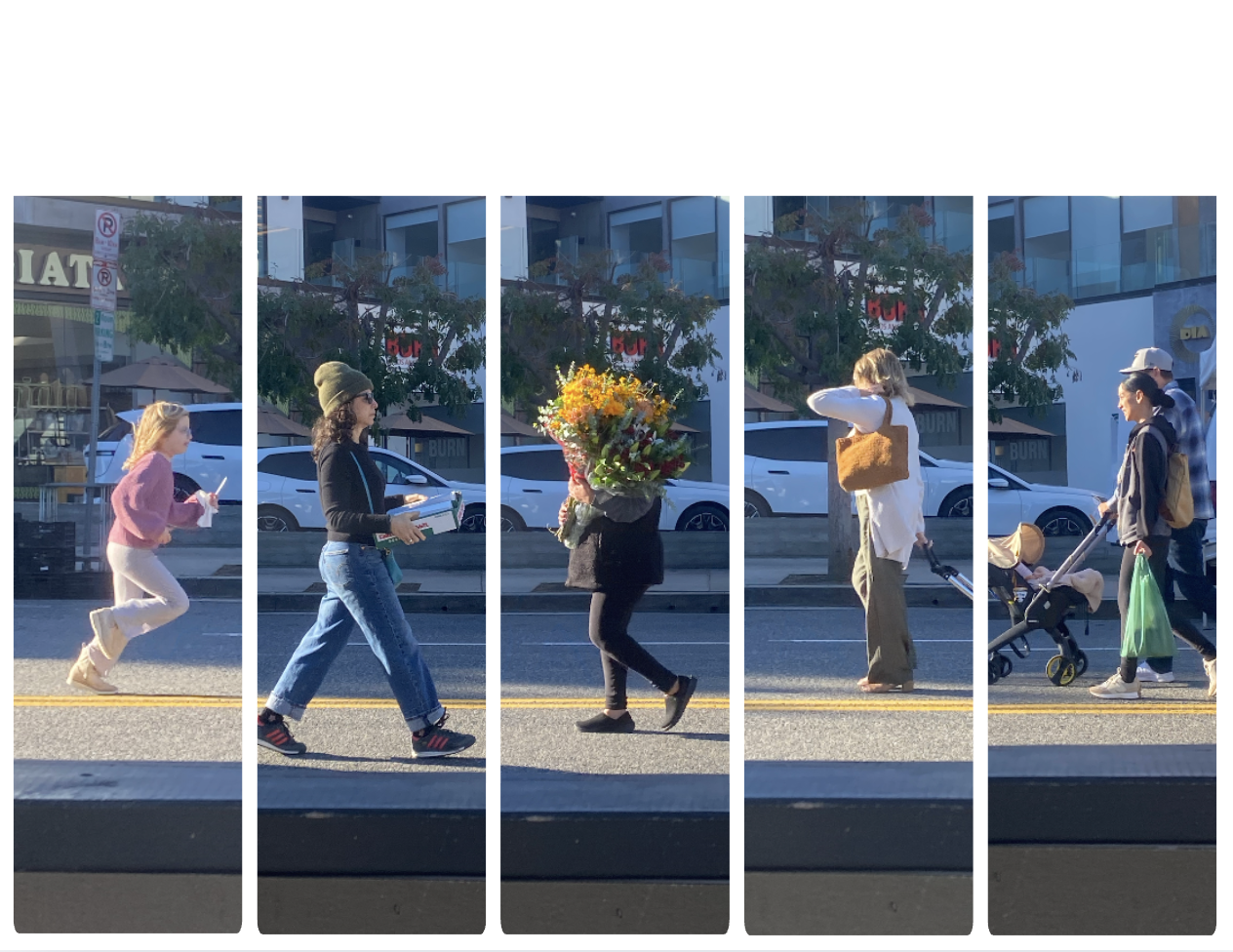
Together, these images create a rhythm of small, human gestures: running, carrying, bending, pushing, shielding, looking. They show how a public space becomes a living narrative when photographed with attention to sequencing, design integration, and ethical storytelling practices.
This series also reflects the core of solutions-focused visual journalism not because it covers dramatic social problems, but because it highlights everyday cooperation, care, and community presence.
These frames ask the viewer to slow down and notice the choreography of a quiet Sunday: a reminder that even the simplest scenes contain stories worth telling.
Creative Process
My goal for this project was to use an ordinary Sunday farmers market to explore how visual storytelling can emerge from small, unposed gestures. Rather than searching for dramatic or newsworthy events, I wanted to reveal what Mario García calls the “fusion” of writing, editing, and design a method that transforms everyday life into a coherent visual narrative (García). I approached the market as a stage, one in which people’s motions, hesitations, and routines naturally create story.
I shot these images from across the street, a conscious technique rooted in the ethical distance emphasized in NPR’s Visual Journalism guide. The guide encourages photographers to show humanity without intrusion, allowing scenes to unfold authentically (“Visual Journalism”). This fixed vantage point turned the street into a stage, giving me time to anticipate what Cartier-Bresson would describe as decisive moments those fractions of a second in which gesture, light, and meaning align (Cartier-Bresson).
As I photographed, I focused on sequencing rather than individual images. The Photo Narratives resource from Module 2 helped frame my understanding of “beats” transitional moments that shape the emotional rhythm of a story (“Photo Narratives”). This guided the order of my final selection: beginning with energetic motion, moving through pauses and points of tenderness, and ending with a slow exit from the frame.
Thematically, caregiving kept appearing in my photographs: a father pushing a stroller, a parent adjusting a baby wrap, someone bending to pick up a fallen tote bag. Nicole Dahmen’s work on solutions-focused visual journalism argues that storytelling should broaden what we see as meaningful, highlighting resilience and care rather than conflict (Dahmen). While my project is not explicitly solutions journalism, it reflects Dahmen’s emphasis on capturing cooperation and human connection.
I also applied visual design principles introduced in earlier modules, such as figure–ground clarity and compositional rhythm. By shooting in early morning light, long shadows helped separate subjects from the background, aligning with the perceptual principles we studied in Module 1. Rhythm appears through alternating fast and slow images the sprinting child, the disrupted shopper, the contemplative stroller gaze echoing Ron Reason’s argument that visual storytelling comes alive through intentional sequencing and editorial structure (Reason).
Influences also came from contemporary visual journalism platforms like Reading the Pictures, DuckRabbit, and the New York Times Lens blog, all of which emphasize empathetic observation and gesture-driven storytelling. These sources reinforced the idea that small motions shielding one’s eyes, adjusting fabric, carrying flowers can reveal deeper emotional truths when framed thoughtfully (“Reading the Pictures”; “Lens”; “DuckRabbit”).
Ultimately, my creative process centered on patience, observation, and editorial intention. I waited for natural interactions rather than seeking dramatic ones. I organized the photos to create a smooth narrative flow. I used captions not as descriptions but as emotional extensions of each frame, designed to reinforce the guiding idea behind the series: that a quiet Sunday morning contains its own choreography of care, movement, and meaning.
The project is a synthesis of what we studied with the decisive moments, narrative sequencing, ethical distance, solutions-focused framing, and design integration. It reflects the belief that everyday public life is rich with story, if only we choose to look closely.
Sources
Cartier-Bresson, Henri. The Decisive Moment. Verve, 1952. (Module 1).
Dahmen, Nicole. “How to Do Better Visual Journalism for Solutions Stories.” Solutions Journalism Network, 2020. (Module 3).
DuckRabbit. “Stories.” DuckRabbit.info. (Module 4).
García, Mario R. Digital Storytelling: The Fusion of Writing, Editing, Design. The Poynter Institute. (Module 2).
“Lens: Photography.” The New York Times, http://www.nytimes.com/section/lens. Accessed 2024. (Module 4).
“Photo Narratives.” KQED Education, 2019. (Module 2).
“Reading the Pictures.” ReadingThePictures.org, 2023. (Module 4).
Reason, Ron. “The Integration of Writing/Editing/Design.” Ron Reason Design, 2010. (Module 1).
Schugart, Annie. “The Best in Interactive Multimedia Journalism.” Medium, 2018. (Module 3).
“Visual Journalism.” NPR Training, training.npr.org, 2021. (Module 3).
 Levy It All To Me