
If you are a lot like me, three weeks ago, you probably had zero clue what a design sprint is but you probably have participated in something similar to it within your life.
What is a design Sprint?
A Design Sprint “is a fast paced structured process where a team comes together to create something. This process allows a team of people to tackle complex challenges and test new concepts. It’s a distilled and concentrated methodology based on Design Thinking and Agile principles, developed by Google Ventures and enhanced by practitioners worldwide.”
So to dumb that down…
Design Sprints are basically a team of people (who might have different backgrounds) who break down the design process with one person leading the group to help move things along faster. This helps go thorough ideas and really build a fully thought out end result.

So what does this whole process look like?
Day 1:
The Group starts with “a series of structured conversations to build a foundation and a focus for the sprint week. The structure allows the team to “boot up” as much information as quickly as possible, while preventing the usual meandering conversations.”
So to dumb that down…
This is a quick understanding of each team member and a get to know you. You point out who the facilitator is and who the decision maker is, then the group is off to the races.
The first thing on the docket is to set long term goals for the project. Write down answers to why you are doing this and where the group wants to see this in 6 months or even 5 years down the line.
Then, list out questions… and be realistic about it.
- How could this fail?
- What happens if it does not work as intended?
- Does the intended audience need or want this?
- Does this fix a temporary problem or a permanent one?
- How this been done before and better?
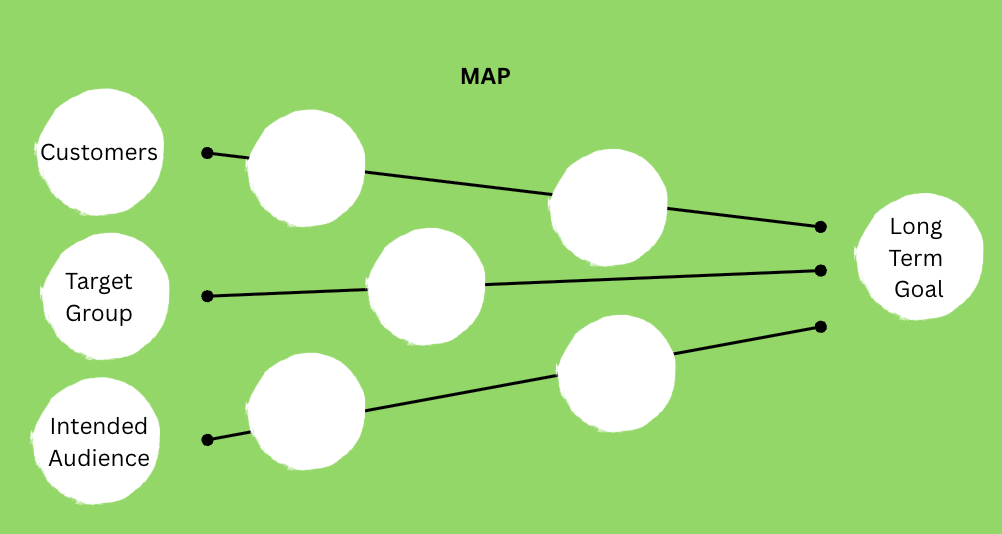
The next step is called making a map…but to me it looks more like a timeline.
Make a circle on the left of a paper and inside it write down intended customers and key audiences. You have to know who you are making this for. On the far right side make a circle and write the final goal of the product or service, then fill in the middle with little steps to get to that end goal. Like a timeline.
Once that is all done…
It’s time to ask the experts. In this part, the group will interview and research experts to better understand if the group’s ideas are on the right path or if they have to change some of their goals. They should ask questions about the overall product, customer research, how something might work and other in depth questions.

Now it’s Time for the “How Might We,”?
Back to the group, everyone gets a post-it and will be writing down “How Might We,” questions. This gets posted up on a whiteboard so the whole group can see.
For Example: “How Might We,” keep our younger audience engaged in learning outside of school.
Once these post-its are up on the wall, they can start being put into categories. This is about really breaking down what kind of problems and questions the group needs to ask as they go along. It’s good to get out in the open for everyone to understand.
Then everyone gets to pick which note to put onto the timeline or map to increase understanding of going from customer to end goal.
Then circle what ideas and questions to focus on the most.
If you want an event better overview of what Day 1 looks like…
This is all in the first day, sounds like a lot but with a good facilitator this can be moved along in a timely manner.
Come Back Next week for a better in depth understanding of Day 2!
 Levy It All To Me